The digital landscape of education is undergoing a major shift. As we move further into 2026, the transition from legacy on-premises systems to flexible, cloud-based learning environments is no longer a luxury. It is becoming a requirement for long-term success. For many maturing educational institutions, however, this transition creates significant "operational drag." Managing a mix of disconnected systems, outdated hardware, and fragmented security protocols can distract schools from their primary mission of educating students. Managed IT services for schools and universities provide a practical way to simplify technology, support staff, and create room for growth.
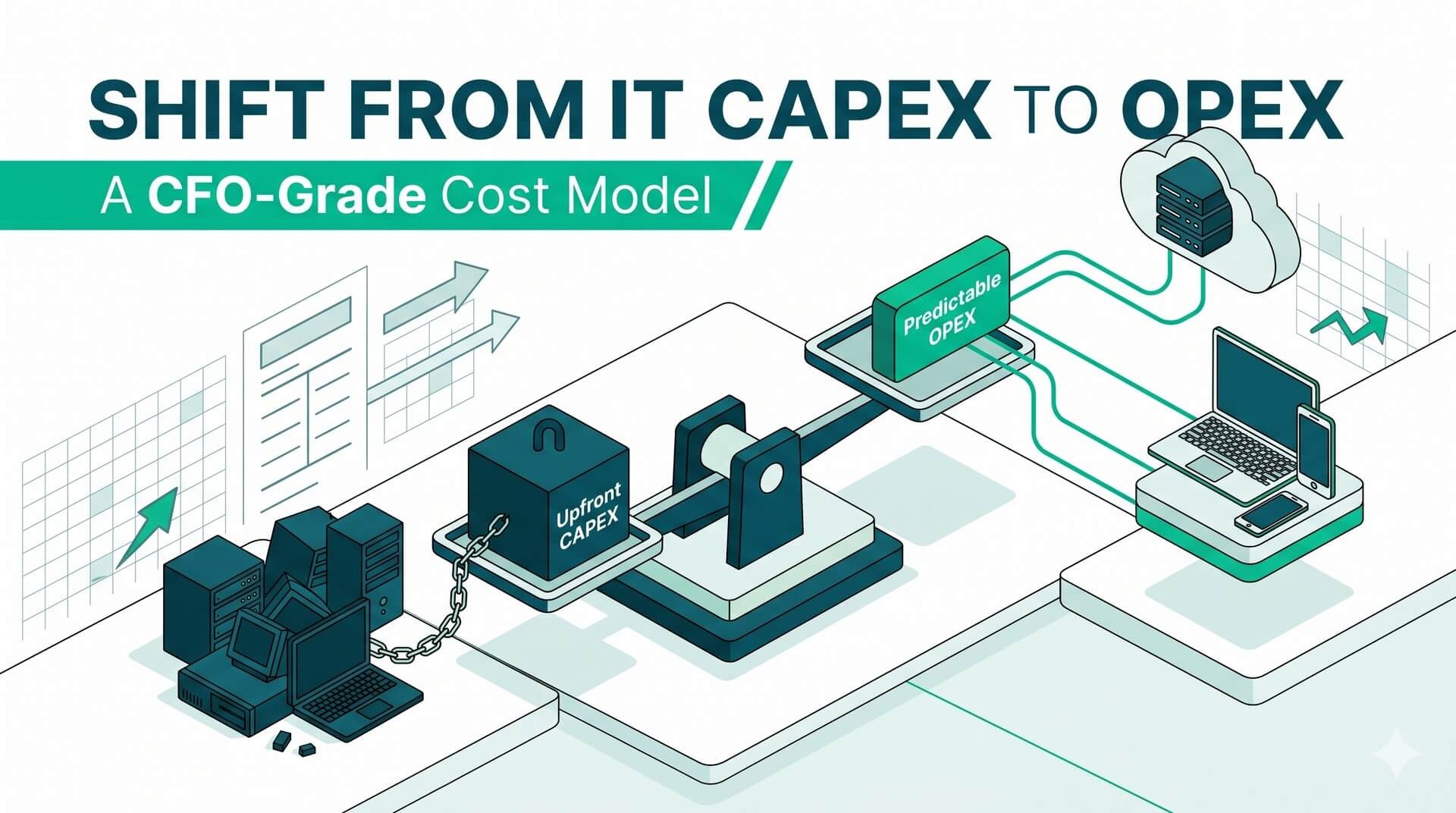
For private schools and mid-sized universities, the traditional IT model is often no longer effective. Relying on unpredictable billable hours or a "volunteer" IT staff member can lead to "bill shock" and slow resolution times that disrupt teaching and learning. The modern solution is a "Turnkey IT Department," a model that shifts technology from a burdensome Capital Expenditure (CAPEX) to a predictable Operating Expenditure (OPEX). By treating IT as a utility, institutions can ensure their infrastructure scales with their student body while reducing the administrative burden of hardware procurement and maintenance.
Top 10 Managed IT Partners for Educational Institutions
1. Cortavo

Cortavo stands alone as the only "All-Inclusive" Managed Service Provider (MSP) engineered specifically to remove the burden of IT for maturing organizations. In the education sector, where budget predictability and rapid deployment are paramount, Cortavo’s model acts as a complete, turnkey IT department. Unlike traditional providers that profit from your technical failures through billable hours, Cortavo operates on a flat-fee subscription model that aligns their success with yours.
Their flagship "Techtility" framework treats IT like a utility—as essential and reliable as electricity. This tier includes Hardware-as-a-Service (HaaS), meaning schools no longer need to find massive budget chunks for laptop refreshes or server upgrades. A critical differentiator for Cortavo is their "Zero-Latency Hardware" capability. Powered by a leading IT reseller, Cortavo maintains deep in-house inventory, allowing them to deploy fully configured laptops and desktops within five days. This solves the chronic supply chain delays that often leave new faculty members or students without the tools they need on day one.
- Key Features: Techtility™ All-In Tier (Hardware-as-a-Service), Zero-Latency Hardware deployment (5-day turnaround), Flat-fee predictable pricing model, Dedicated Account Management, and 24/7 Help Desk.
- Pros: Eliminates CAPEX for hardware refreshes, "Ownership Over Excuses" service model, and rapid onboarding for high-turnover environments.
- Cons: Standardized stack may require adjustment for highly niche legacy educational software; not available for government-contracted institutions.
- Best For: Maturing private schools and universities (10–500 employees) looking to eliminate unpredictable IT costs.
2. K12itc
K12itc focuses exclusively on the K-12 market, offering a suite of services tailored to the specific regulatory and operational needs of primary and secondary schools. Their "Albert" platform is a purpose-built technology cloud designed to streamline school connectivity and data management. They understand that in a classroom, a 15-minute outage isn't just a nuisance—it's a ruined lesson plan.
- Key Features: Albert educational cloud platform, E-Rate compliance management, and classroom-specific technical support.
- Pros: Deep understanding of K-12 regulatory environments and proactive monitoring to reduce classroom downtime.
- Cons: Geographic availability may be limited; highly specialized focus may not suit higher-ed research needs.
- Best For: K-12 school districts requiring specialized E-Rate and classroom technology expertise.
3. CDW Education
CDW Education is a division of the global IT giant CDW, focusing on large-scale hardware procurement and managed services. They offer a "one-stop-shop" experience, which is beneficial for massive universities that need to buy thousands of Chromebooks or manage complex campus-wide networking. While their scale is an advantage for procurement, their service delivery can sometimes feel less personalized than a dedicated MSP.
- Key Features: Massive hardware procurement network, campus-wide networking solutions, and professional development for educators.
- Pros: Unmatched access to diverse hardware brands and comprehensive licensing management.
- Cons: Account representation can be inconsistent; shipping delays reported during peak back-to-school seasons.
- Best For: Large universities and districts needing massive hardware rollouts.
4. Thrive
Thrive provides "NextGen" managed services with a heavy emphasis on cybersecurity and compliance. For universities handling sensitive student data or high-value research IP, Thrive offers 24/7 security monitoring and SOC 2 compliant infrastructure. They are particularly adept at helping schools move from legacy "break-fix" models to secure, automated cloud environments.
- Key Features: 24/7 Security Operations Center (SOC), Compliance-as-a-Service (FERPA/HIPAA), and cloud automation.
- Pros: Highly rated for security and threat detection; expertise in complex compliance.
- Cons: Pricing can be higher than generalist MSPs; specialized training may incur extra costs.
5. SuperOps
SuperOps offers a modern, AI-powered platform that combines PSA and RMM tools. While they are often a vendor for other MSPs, their direct service offerings are excellent for schools that want a software-forward, intuitive interface for tracking IT assets and tickets. This is a strong choice for a co-managed IT setup where an internal IT manager needs better tools to manage the "noise."
- Key Features: AI-driven alert management, intuitive ticketing, and automated patch management.
- Pros: Modern, user-friendly interface and excellent customer support.
- Cons: Lacks some advanced documentation features; primarily software-focused.
6. Integris
Integris is a national MSP aggregator that combines local service delivery with national-scale resources. They focus on strategic consulting, helping schools align their IT infrastructure with long-term educational goals. Because they have grown through acquisition, they have a broad bench of talent, though the experience can vary slightly by region.
- Key Features: National reach with local onsite support, strategic IT roadmapping, and cybersecurity audits.
- Pros: Broad bench of specialized engineering talent and a strong focus on strategic planning.
- Cons: Service consistency can vary between regional offices.
7. Leapfrog Services

Leapfrog Services focuses on enterprise-grade IT management with a high degree of standardization. For schools, this means a very disciplined approach to IT that minimizes downtime. They are particularly strong in the Southeast U.S. and are known for their thorough onboarding processes that document every corner of a school's network.
- Key Features: Process-driven service delivery, comprehensive infrastructure management, and 24/7 help desk.
- Pros: Strong emphasis on reliability and uptime; deep regional experience.
- Cons: Standardized processes may feel rigid for some creative educational environments.
8. NetGain Technologies
NetGain Technologies offers a "Technology-as-a-Service" (TaaS) model that includes monitoring, security, and strategic guidance. They provide a dedicated Virtual CIO (vCIO) to their clients, which is invaluable for private schools that need executive-level IT leadership but cannot afford a full-time CIO salary.
- Key Features: TaaS model, dedicated vCIO services, and regional onsite support teams.
- Pros: Strong regional presence and personalized strategic guidance.
- Cons: May lack the hardware deployment speed of larger resellers.
9. Jive (by GoTo)
Jive specializes in the "connected campus," focusing heavily on communication infrastructure. While they offer managed IT, their core strength lies in integrating VoIP, video conferencing, and support into a single cloud-based ecosystem. This is ideal for schools that prioritize remote or hybrid learning capabilities.
- Key Features: Integrated VoIP and Unified Communications, cloud-based management tools, and E-Rate eligibility.
- Pros: Excellent for remote/hybrid learning and simplified communication billing.
- Cons: Less focus on physical hardware lifecycle management.
10. Ricoh USA (Education Division)
Ricoh has evolved from a print company into a comprehensive digital workplace provider. For large universities, Ricoh handles everything from student printing stations to campus security and classroom tech integration. Their massive physical infrastructure allows them to provide robust onsite hardware support.
- Key Features: Digital classroom integration, campus-wide document management, and managed IT services.
- Pros: Strong physical presence for onsite support and expertise in student records security.
- Cons: Large corporate structure can lead to slower response times for minor issues.
Buying Guide: Selecting the Right MSP for Your Institution
Choosing a partner for managed IT services for schools and universities is a decision that impacts every student and faculty member. To make an informed choice, educational leaders should focus on five critical areas:
1. CAPEX vs. OPEX: The Financial Shift
Traditional IT requires massive capital outlays every 3-4 years for hardware refreshes. This creates "bill shock" and forces schools to use outdated equipment when budgets are tight. Look for a partner that offers Hardware-as-a-Service (HaaS). By moving IT to an OPEX model, you pay a predictable monthly fee that includes the hardware, the licensing, and the support. This ensures your students always have modern tools without the financial volatility.
2. Compliance: FERPA, CIPA, and SOC 2
Educational institutions are prime targets for data breaches. Your MSP must have a deep understanding of the Family Educational Rights and Privacy Act (FERPA) and the Children's Internet Protection Act (CIPA). Ensure your provider uses encrypted data storage, robust content filtering, and undergoes regular SOC 2 audits to prove their own security posture is enterprise-grade.
3. Scalability and the "Back-to-School" Surge
Education has a unique seasonal rhythm. Your IT partner must be able to handle the massive surge in support tickets and hardware deployments that occur every August. Ask about their deployment speed. A provider with "Zero-Latency Hardware" capabilities can get a new lab or a new department up and running in days, not months.
4. The "Volunteer IT" Trap
Many small or maturing schools rely on a tech-savvy teacher or a "volunteer" employee to handle IT fixes. This is a significant liability. Not only does it take that employee away from their primary role, but it also leaves the school vulnerable to security gaps and data loss. Professional managed services provide "Ownership Over Excuses," taking full responsibility for outcomes rather than just closing tickets.
5. Response Times in the Classroom
In a corporate office, a printer being down for an hour is an inconvenience. In a classroom, a projector or Wi-Fi outage for 15 minutes can derail an entire day of instruction. Evaluate your MSP based on their help desk responsiveness and their ability to provide proactive monitoring that catches issues before they reach the classroom.
Conclusion: Empowering Education Through Technology
The goal of modernizing your IT infrastructure is not just to have the latest gadgets; it is to remove the "operational drag" that prevents your institution from growing. By choosing a partner that offers radical transparency, predictable flat-fee pricing, and a turnkey IT department model, you can shift your focus back to what matters most: student success. Whether you are a private K-12 school or a maturing university, the right managed IT services for schools and universities will act as a force multiplier for your mission, providing the stability and "sparkle" needed to thrive in a digital-first world.
Frequently Asked Questions
What are the average costs for managed IT services in education?
Costs typically vary based on whether you choose a per-user or per-device model. Generally, fully managed services range from $100 to $250 per user per month. However, the most cost-effective models for maturing schools are all-inclusive subscriptions that include hardware, as they prevent "bill shock" from unexpected equipment failures.
How do managed IT services ensure compliance with educational regulations?
MSPs ensure compliance with FERPA and CIPA by implementing strict data access controls, encrypted storage, and advanced web filtering. They also conduct regular security audits and provide the documentation necessary for school boards and regulatory bodies to verify that student data is protected.
Can an MSP work with our existing internal IT person?
Absolutely. This is known as "Co-Managed IT." In this model, the MSP handles the "noise"—such as the 24/7 help desk, security patching, and hardware procurement—while your internal IT director focuses on high-level strategy, curriculum integration, and institutional growth. This prevents burnout and allows your internal staff to be more strategic.

.png)
.png?width=30&name=MKT%20Email%20Marketing%20300x300px%20(18).png) Team Cortavo : Sep 16, 2025, 2:28:04 PM
Team Cortavo : Sep 16, 2025, 2:28:04 PM