
1 min read
The Best IT Compliance Tools for Construction Firms
For modern construction firms, managing sensitive data is a daily reality. From project bids and proprietary blueprints to client financials and...
9 min read
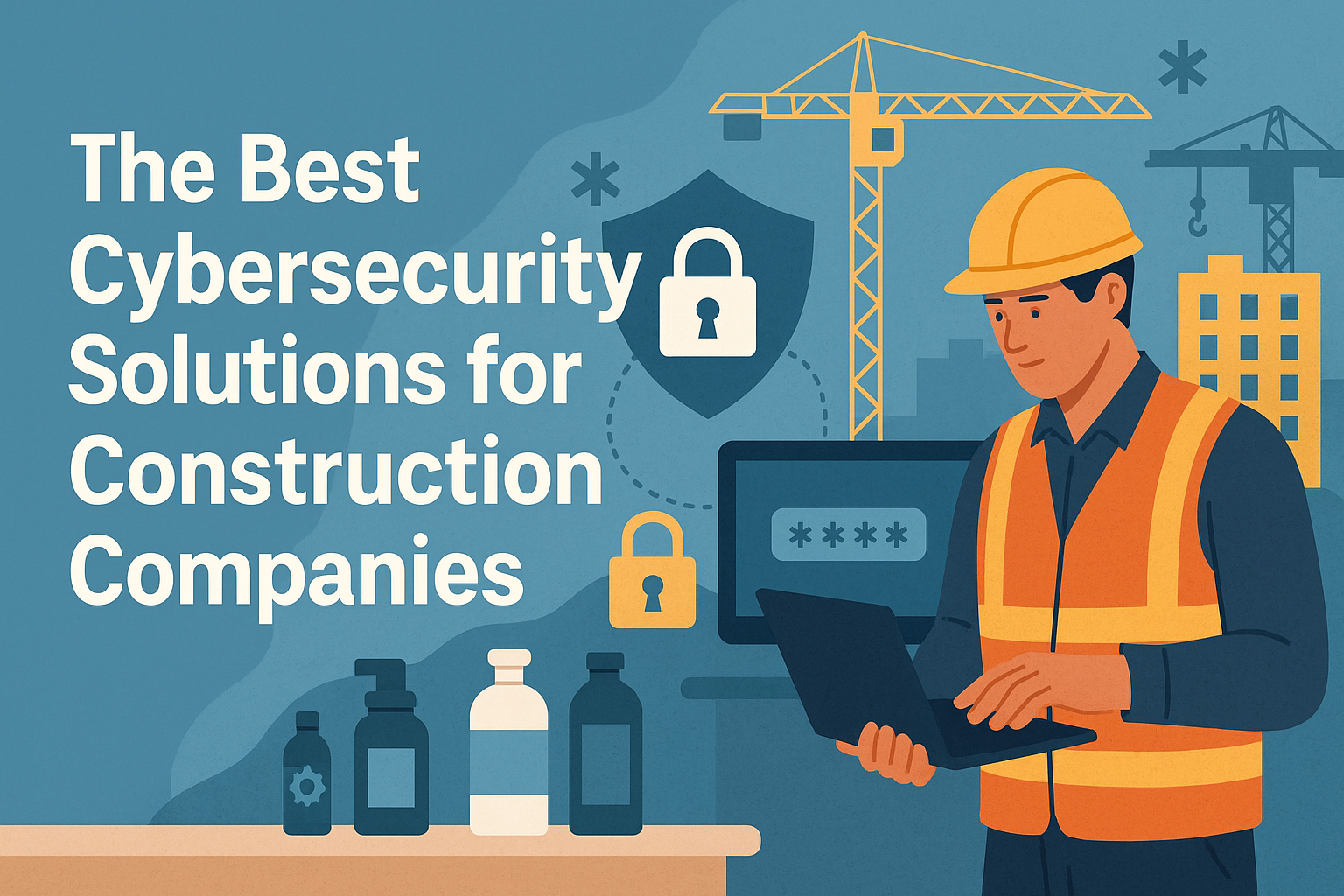
The construction industry has rapidly adopted digital tools to improve efficiency, from BIM and project management software to drones and IoT sensors on job sites. This digital transformation streamlines operations but also introduces significant new risks. Every connected device, cloud-based blueprint, and digital transaction becomes a potential entry point for cyber threats. For firms that don't adapt their security posture, the consequences can be severe, ranging from stolen intellectual property to complete operational shutdowns. Finding the right cybersecurity for construction is no longer an IT issue; it’s a core business requirement for protecting assets and profitability.
These vulnerabilities are not abstract threats. A ransomware attack can lock up critical project files and schedules, leading to costly delays and contractual penalties. Theft of sensitive bid information or proprietary designs can undermine competitive advantage. As projects become more interconnected, a breach through a single subcontractor can compromise the entire supply chain. This guide evaluates leading cybersecurity services to help construction leaders identify a solution that protects their digital assets, secures job sites, and ensures operational continuity in an increasingly complex threat landscape.
The high value of data and the critical nature of project timelines make construction firms an attractive target for cybercriminals. Understanding these specific risks is the first step toward building an effective defense. A proactive security strategy addresses these vulnerabilities to prevent disruption and protect your bottom line.
The data clearly shows that ignoring cybersecurity is a significant financial risk. For construction companies, where margins are tight and deadlines are critical, the cost of a single breach can be devastating. These statistics highlight the tangible ROI of investing in a robust security plan.
To identify the most effective cybersecurity solutions for the construction industry, we focused on providers that address the sector's unique operational challenges. Our evaluation prioritized solutions that deliver practical, measurable value and can scale with a company's growth.
Choosing a cybersecurity partner is a critical decision. The following providers offer a range of services tailored to the needs of modern construction firms, from all-in-one managed IT to specialized compliance and network security.

Role: All-in-One Managed IT & Cybersecurity Provider
Snapshot: Cortavo delivers a complete, flat-fee managed IT solution designed to simplify technology for construction firms. The service bundles robust cybersecurity protections, 24/7 help desk support, hardware procurement, connectivity, and strategic IT guidance into a single, predictable monthly plan. By integrating all aspects of IT management, Cortavo removes the complexity of dealing with multiple vendors and allows construction leaders to focus on their core business. Their proactive approach ensures that systems are monitored, patched, and secured against emerging threats, minimizing downtime and protecting sensitive project data across office, remote, and job site environments.
Core Strength: Integrated IT and security management under a single, fixed monthly cost.
Best For: Construction companies looking to outsource their entire IT function for improved security, efficiency, and cost predictability.
Pro Tip: Use their vCIO service to align your technology roadmap with long-term business and project goals.
Role: Network Detection and Response (NDR) Specialist
Snapshot: IronNet focuses on network-level threat detection using behavioral analytics and artificial intelligence. Their platform monitors network traffic across your entire enterprise, including cloud environments and on-premise data centers, to identify anomalous activity that traditional tools might miss. This is particularly useful for construction firms with complex networks spanning multiple job sites and subcontractors. By detecting threats early in the kill chain, IronNet helps security teams respond faster and more effectively, preventing lateral movement by attackers and minimizing the potential impact of a breach on project timelines and data integrity.
Core Strength: Advanced AI-driven network threat detection for complex, distributed environments.
Best For: Larger construction firms with in-house IT teams needing enhanced visibility into network traffic.
Pro Tip: Integrate their alerts with your existing security information and event management (SIEM) for a unified view.
Role: Endpoint Detection and Response (EDR) Leader
Snapshot: CrowdStrike's Falcon platform is a cloud-native solution that provides next-generation antivirus, threat intelligence, and incident response in a single agent. It protects endpoints—laptops, servers, and mobile devices—wherever they are, which is crucial for construction teams working from offices, homes, and job sites. The lightweight agent doesn't slow down devices, ensuring productivity isn't impacted. Its powerful threat hunting capabilities allow for proactive identification of sophisticated attacks, securing everything from project managers' laptops to the servers hosting your BIM files against malware and ransomware.
Core Strength: Cloud-native endpoint protection that stops breaches in real time.
Best For: Companies needing best-in-class protection for a diverse and mobile workforce's devices.
Pro Tip: Leverage their "Falcon OverWatch" service for 24/7 managed threat hunting by their expert team.

Role: Enterprise Security Platform Provider
Snapshot: Palo Alto Networks offers a comprehensive suite of security products, including next-generation firewalls, cloud security, and secure access service edge (SASE) solutions. For construction companies, their firewalls can secure the network perimeter at the main office, while their Prisma Access product provides consistent security for remote workers and temporary job sites. This integrated platform approach helps reduce complexity and ensures that security policies are enforced uniformly across the entire organization. Their solutions are built to handle the high-bandwidth needs of data-intensive applications like BIM and CAD.
Core Strength: A broad, integrated security platform for network, cloud, and remote access.
Best For: Mid-to-large sized construction enterprises seeking a unified security architecture from a single vendor.
Pro Tip: Use their IoT security module to identify and protect all connected devices on your job sites.
Role: Security Awareness Training Specialist
Snapshot: KnowBe4 tackles the human element of cybersecurity. Since many breaches start with a phishing email, their platform focuses on training employees to recognize and report security threats. They provide a library of training content and simulated phishing attacks to test and reinforce learning. For construction firms, this is vital for protecting office staff who handle sensitive financial data and project managers who are frequent targets of spear-phishing campaigns. By creating a security-conscious culture, KnowBe4 helps turn your employees from a potential vulnerability into a strong line of defense.
Core Strength: Engaging security awareness training and simulated phishing campaigns.
Best For: Firms of all sizes looking to reduce risk by improving their employees' security habits.
Pro Tip: Customize phishing simulations to mimic real-world threats specific to the construction industry, like fake invoices.
Role: Vulnerability Management Platform
Snapshot: Tenable provides tools to continuously scan your entire IT environment—from servers and laptops to cloud infrastructure and operational technology—to identify security vulnerabilities. For construction companies, this means finding weaknesses before attackers can exploit them. Their platform can identify unpatched software on a project manager's laptop, misconfigurations in your cloud storage where blueprints are kept, or vulnerabilities in the smart HVAC systems at your headquarters. By providing a clear, risk-based view of your entire attack surface, Tenable helps prioritize remediation efforts where they matter most.
Core Strength: Comprehensive vulnerability scanning and risk-based prioritization across all assets.
Best For: Companies needing to proactively identify and fix security weaknesses across their entire technology stack.
Pro Tip: Use their web application scanning to secure your client portals and project management platforms.

Role: CMMC & Government Compliance Specialist
Snapshot: Summit 7 focuses exclusively on providing cybersecurity and compliance solutions for companies working with the U.S. Department of Defense (DoD). For construction firms that bid on or manage federal projects, achieving and maintaining Cybersecurity Maturity Model Certification (CMMC) is mandatory. Summit 7 guides companies through the entire compliance process, from initial gap analysis to implementing the required technical controls and preparing for audits. Their deep expertise in government regulations helps contractors navigate the complexities of protecting controlled unclassified information (CUI) and meeting stringent contractual security requirements.
Core Strength: Deep expertise in CMMC compliance for the defense industrial base.
Best For: Construction contractors who work on DoD or other federal government projects.
Pro Tip: Engage them early in the bidding process to ensure compliance won't delay project start.
Role: Cloud-Native Security (Zero Trust) Provider
Snapshot: Zscaler operates a massive global security cloud that acts as a checkpoint between your users and the internet. Instead of routing traffic through a central office firewall, Zscaler securely connects users directly to the applications they need, regardless of location. This "zero trust" approach is ideal for construction's distributed workforce, ensuring that project managers on-site have the same level of security as employees at headquarters. It inspects all traffic for threats, prevents data loss, and eliminates the need for slow, cumbersome VPNs, improving both security and user experience.
Core Strength: A zero-trust security model delivered through a global cloud platform.
Best For: Construction firms with a highly mobile workforce and a cloud-first application strategy.
Pro Tip: Use their Zscaler Private Access (ZPA) to provide secure access to internal apps without network exposure.
Role: Industrial & IoT Cybersecurity Specialist
Snapshot: Claroty specializes in securing the "Extended Internet of Things" (XIoT), which includes operational technology (OT) and specialized devices found on modern construction sites. Their platform discovers, monitors, and protects everything from smart building systems and industrial controls to security cameras and specialized construction equipment. For general contractors managing complex building projects, Claroty provides critical visibility into these often-overlooked devices, helping to prevent them from being used as an entry point for an attack that could disrupt site operations or compromise the entire corporate network.
Core Strength: Deep visibility and protection for operational technology and job site IoT devices.
Best For: Large-scale builders and general contractors managing smart buildings or complex industrial projects.
Pro Tip: Use their platform to create a detailed inventory of all connected devices on a job site.
Role: Data Security and Analytics Provider
Snapshot: Varonis focuses on protecting data from the inside out. Their platform automatically discovers and classifies sensitive data—like financial records, employee information, and confidential bid documents—wherever it lives. It then analyzes user access and behavior to detect insider threats and potential data breaches. For construction firms, this means getting alerts if a user suddenly accesses thousands of project files or if permissions on a critical blueprint folder are changed improperly. By locking down sensitive data and monitoring its use, Varonis helps prevent both accidental leaks and malicious theft.
Core Strength: Automated data discovery, classification, and threat detection.
Best For: Firms concerned with protecting sensitive intellectual property and preventing insider threats.
Pro Tip: Start by running a data risk assessment to find your most exposed sensitive files.
We provide a straightforward process to assess your needs and implement a comprehensive IT and cybersecurity plan with predictable costs.
Our all-in-one, flat-fee model is designed to deliver peace of mind and a clear return on investment for our partners.
The digital evolution of the construction industry demands an equally evolved approach to security. Moving beyond basic antivirus and firewalls is no longer optional; it's a strategic necessity for operational continuity and profitability. Investing in a robust security solution protects your high-value data, prevents costly project delays, and builds trust with clients and partners. By taking proactive steps today, you can safeguard your firm against the financial and reputational damage of a cyberattack. Partnering with an expert who understands your industry's unique demands is the most effective way to build a resilient and secure business. For a comprehensive assessment of your needs for cybersecurity for construction, get in touch with our team. Let's talk!
Implementing multi-factor authentication (MFA) across all critical systems like email, financial software, and project management tools is the single most effective first step. It is a simple, low-cost measure that can prevent over 99% of account compromise attacks.
Absolutely. Attackers often view smaller firms as easier targets because they may have fewer security resources and controls in place. A breach can be financially devastating for a small business, making proactive security essential regardless of your company's size.
CMMC, or the Cybersecurity Maturity Model Certification, is a requirement for any company in the Department of Defense (DoD) supply chain. If you bid on or work on DoD construction projects, you will need to meet specific CMMC compliance levels to be eligible for the contract.
Not always. Building and retaining an in-house team with the necessary cybersecurity expertise, tools, and 24/7 availability is extremely expensive. A managed service provider offers access to a full team of specialists and advanced technology for a predictable, and often lower, total cost.
1 min read
For modern construction firms, managing sensitive data is a daily reality. From project bids and proprietary blueprints to client financials and...
1 min read
The construction industry is undergoing a rapid digital transformation. From Building Information Modeling (BIM) and drone surveys to cloud-based...

1 min read
For nonprofit organizations, every dollar must be maximized to support the core mission. Technology is a critical tool for achieving that mission,...