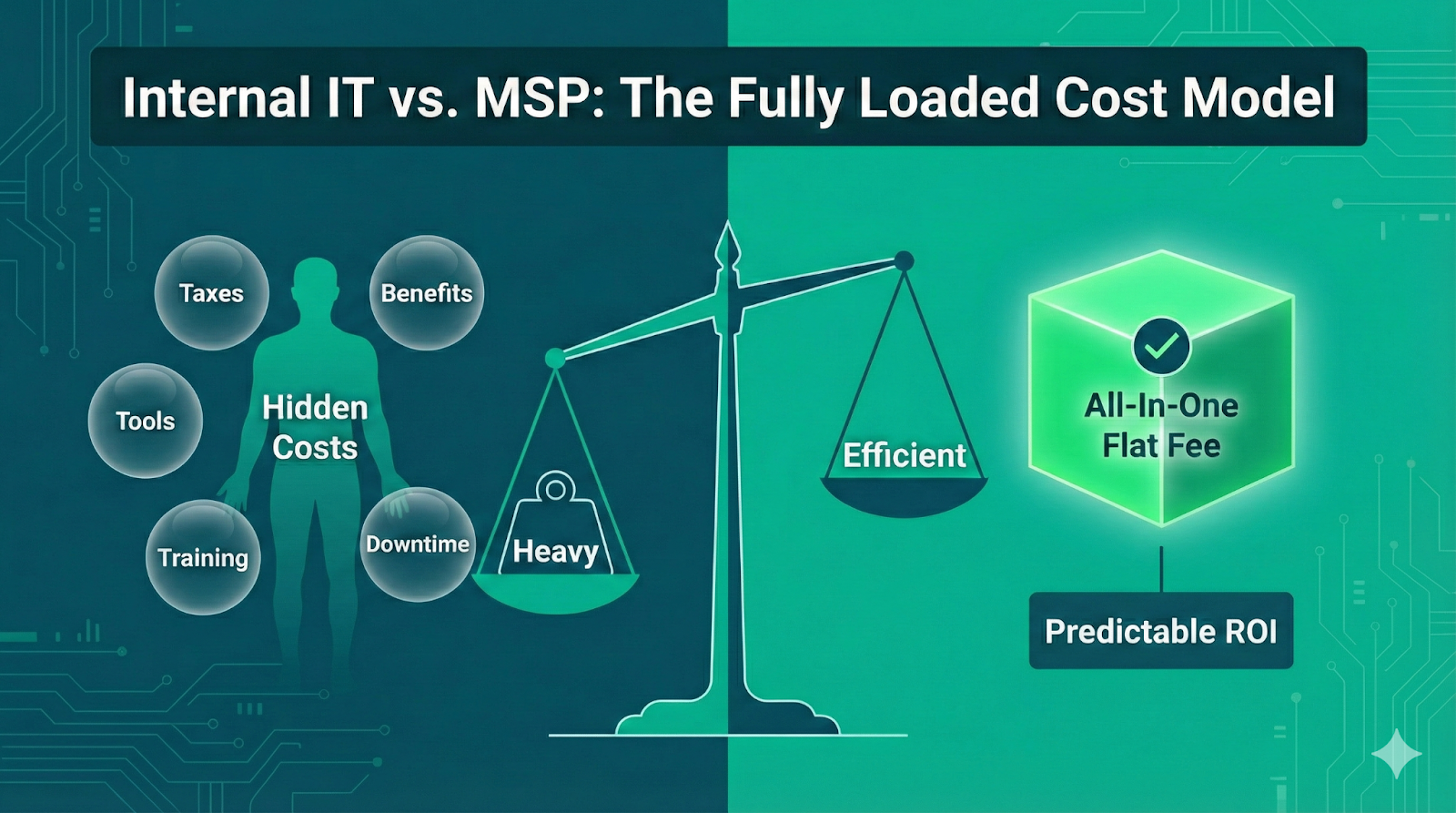
Every leader knows the pressure of making forecasts in times when cloud costs grow overnight, SaaS renewals go unnoticed, and hardware fails right when budgets decrease.
That’s why you need a way to manage costs as they happen, and IT cost management should play a more important role in your company. It gives you a framework to stabilize spending, reduce waste, and make your IT budget behave.
What Is IT Cost Management?
At its core, IT cost management is the discipline of controlling, analyzing, and optimizing how your organization spends money on technology.
The point of IT cost management is to understand where every dollar goes, why you’re spending it, and if it delivers measurable value and ROI. In well-run IT departments, this becomes a repeatable system that guides purchasing, planning, and long-term investment decisions.
When done correctly, it creates an in-depth, up-to-date view of your technology spending, from cloud consumption and licensing to hardware depreciation and managed services.
The foundation is to:
- Track every IT expense across owners, departments, and workloads
- Align expenses with business outcomes
- Prevent waste of money from unused or underutilized tools
- Forecast with historical and real-time data
- Support audits and compliance with transparent documentation
When you don’t see data, you can’t negotiate, reduce, or redirect spend with confidence.
With data, you build a cost-effective IT environment that scales without creating financial surprises.
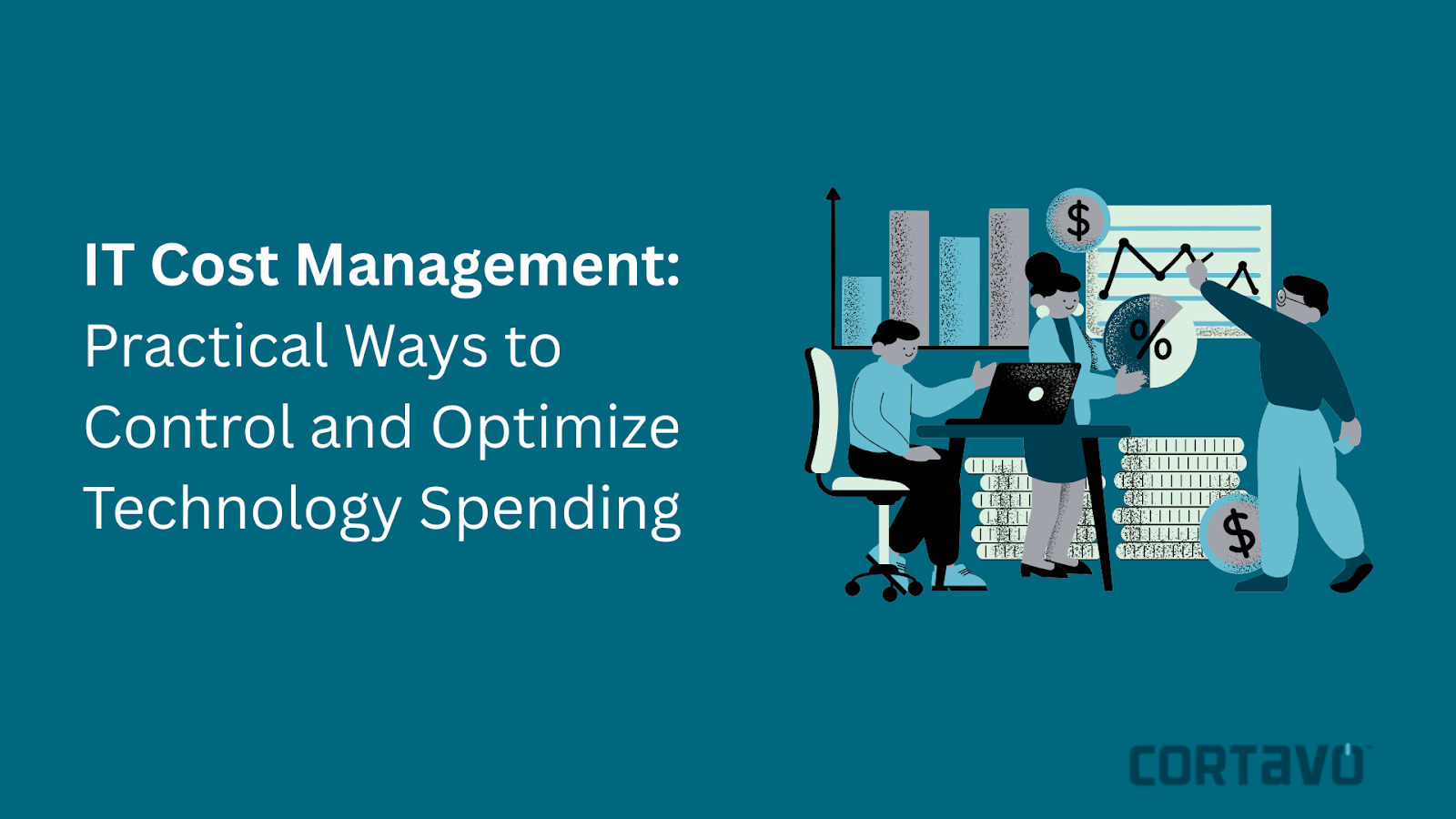
Main Functions of IT Cost Management
Before you can build a scalable approach to IT cost management, you need a framework that keeps spending predictable and always ties to business outcomes. You really can’t treat budgeting as a once-a-year activity. It has to be an operational process.
In reality, controlling technology spending depends on four ongoing functions that work together to plan, allocate, monitor, and optimize costs across the entire IT ecosystem. These functions are what allow CIOs and finance leaders to maintain IT budget optimization and run a cost-effective IT environment.
Resource Planning
Which tools do you need, and which ones just drill a hole through your budget?
Resource planning gives you insights into what your IT organization actually needs, financially and operationally. It also prevents teams from building, buying, or deploying technology without strategic justification. This is how you determine which investments belong in CAPEX (long-term assets) and which ones in OPEX (recurring services).
This includes:
- Checking infrastructure, cloud workloads, SaaS platforms, hardware, and security tools
- Identifying which systems support strategic goals versus daily operations
- Flagging tools or services that can be consolidated, retired, or moved from CAPEX-heavy models to more predictable OPEX-based services
Cost Estimating
And when you’ve planned your resources, it’s time to estimate the cost. Cost estimating sets realistic financial expectations using data. This requires an understanding of vendor pricing and how costs will scale as workloads grow, departments expand, or new initiatives roll out.
The most important parts of cost estimating are:
- Modeling cloud consumption, scaling patterns, and usage variability
- Analyzing SaaS license tiers and utilization trends across teams
- Forecasting data growth, lifecycle timelines, storage needs, and depreciation
Accurate estimating prevents budget overruns and inflated estimates that take up capital unnecessarily. It equals more stable financial planning and expenses become predictable, not surprises.
Cost Budgeting
Cost budgeting determines how much you should spend and how to allocate funds across teams and workloads. At this stage, IT leaders set the financial expectations for the entire year.
This includes:
- Assigning budgets to departments, projects, services, and cost centers
- Setting guardrails for new tool adoption and renewal cycles
- Establishing ownership for cloud, SaaS, infrastructure, and support consumption
A good budgeting process reduces duplicate purchases and creates the predictable structure needed for sustainable IT budget optimization. It makes budgets clearer and easier to align with business goals.
Cost Control
Cost control monitors spending continuously and makes sure that usage matches what was planned. This process exposes waste before it becomes a financial problem and helps you adjust quickly when there are usage changes.
This includes:
- Tracking real-time SaaS, cloud, storage, compute, and network utilization
- Comparing monthly usage to planned budgets and reallocating resources when needed
- Enforcing consumption policies, renegotiating vendors, and correcting drift proactively
Strong cost control delivers immediate results. It minimizes waste, stabilizes cloud costs, and keeps your environment aligned with business goals. This is where cost management becomes operational and enables consistent cost-effective IT.
5 Ways to Manage Technology Spending
There isn’t one perfect way to manage technology spending, but certain practices make it easier. These can support your efforts to reduce overspending and maintain consistent IT cost management:
- Centralize all technology spend data: A unified view of cloud, SaaS, hardware, support, and labor can give you real visibility. When all of your spending is in one place, technology spending is predictable and waste surfaces immediately.
- Run continuous cloud optimization: Cloud costs change constantly. Regular rightsizing, storage tiering, and removal of idle resources prevent overspending that makes IT cost management difficult to maintain.
- Evaluate SaaS tools twice a year: When you review usage, eliminate redundant applications, and adjust license tiers, you protect the budget from unnecessary subscriptions and align SaaS costs with demand.
- Standardize equipment refresh intervals: You have to set consistent refresh intervals for laptops, servers, and network gear to even out spending across the fiscal cycle. And you can do that with a documented schedule because IT can phase costs, negotiate better pricing, and avoid the higher OPEX that comes from running aging, failure-prone equipment.
- Implement TCO analysis: A TCO review shows the full cost of your IT investments over their lifetime. It covers licensing, maintenance, upgrades, support, cloud usage tied to the tool, and the labor required to run it. When you use TCO, it helps teams to decide whether to keep, replace, or consolidate a tool, which in turn supports smarter IT budget optimization.
Benefits of IT Cost Management
When you implement structured IT cost management, you get control over your entire technology ecosystem: cloud, SaaS, infrastructure, security, support, and labor. It allows your IT and finance leaders to operate with visibility, accuracy, and predictability.
But what are some tangible benefits you’ll experience first?
Predictable Tech Spend
One of the most immediate benefits is stability. Clear resource planning, accurate estimating, and continuous cost control eliminate surprise invoices. Predictability allows CIOs and finance managers to plan multi-year initiatives and maintain confidence in the numbers. This creates a foundation for sustainable IT budget optimization.
Reduced Unnecessary Spend
When there is no IT cost management, overspending happens more often than not. You end up with unused SaaS licenses, abandoned cloud instances, duplicate tools, and unmanaged contract renewals. All of these quickly stack up.
When cost control and budgeting are in place, you can actually see all of this and react.
As a result, you can uncover 15-30% of recoverable spend simply by aligning usage with actual demand. And with that, structured technology spending oversight can deliver immediate results.
Stronger Alignment Between IT and Business Goals
Strong resource planning and budgeting make it obvious which technologies support revenue, operations, and long-term goals. It cuts out lengthy decision-making and directs funding toward initiatives that matter to your business. It leads to cleaner prioritization, fewer budget disputes, and an IT function that focuses on strategy.
More Leverage in Vendor Negotiations
Cost management gives you hard data like license usage, cloud consumption patterns, contract benchmarking, renewal timelines, and business value metrics. Armed with this data, you can negotiate better prices. And with better pricing and flexible terms, you get budget-friendly and predictable technology spending across the year.
Improved Forecasting and Financial Planning
Accurate estimating and real-time cost control enable you to predict future needs with confidence. Your forecasting will rely on real figures, patterns, and math, and leave no room for guesses. Reliable forecasting also supports long-term IT budget optimization and makes your financial plans remain stable as workloads grow.
Stronger Compliance and Audit Readiness
With systematic classification, documentation, and monitoring, every dollar is accounted for. For you this means improved compliance posture, accelerated audits, and reduced risk. Structured records also support cybersecurity insurance requirements, contract audits, and financial reporting. You see this clearly in cybersecurity companies, where precise documentation and cost control are core to maintaining trust and compliance.
How ITSM Strengthens IT Cost Management
IT service management isn’t a cost management strategy per se, but it does provide the necessary structure that makes cost control possible. When all of your services, assets, changes, and support workflows follow a consistent framework, your organization can eliminate unnecessary technology spending.
The Benefits ITSM Brings to Cost Control
- Cleaner asset data helps prevent redundant hardware, unused SaaS licenses, and unmanaged cloud resources.
- Standardized change management reduces outages, rework, and emergency fixes, which are some of the fastest ways budgets get derailed.
- Faster, more consistent incident resolution cuts down on labor hours spent troubleshooting the same issues.
- Defined service request processes restrict unapproved purchases before they create recurring costs.
- Built-in governance and approvals align new tools and configurations with business priorities instead of individual preferences.
These benefits give IT and finance the predictability and operational stability they need for effective IT cost management. With ITSM in place, budgets become more accurate, waste becomes easier to identify, and long-term IT budget optimization actually becomes achievable.
Cortavo Offers Predictable, Cost-Efficient IT
At Cortavo, our goal is simple: to give you a stable, fully managed environment with pricing you can plan around.
We operate on a flat-fee model, so your monthly cost doesn’t change when issues appear. With Cortavo, you gain a complete IT team without surprise invoices, hourly troubleshooting fees, or sudden project charges.
We refresh equipment on a set schedule and replace failing devices in advance, preventing unexpected costs and the slowdown that comes from aging hardware.
Our U.S. based engineers monitor your devices continuously, so your systems stay patched, and support is available around the clock. With our IT management services, you avoid operational drift and keep your technology spending stable.
With Cortavo as a partner, you gain a consistent, cost-controlled IT foundation. We help you leave reactive spending behind and move on to a predictable, cost-effective IT model that you can trust.
Final Thoughts
When your IT costs are predictable, everything else becomes easier: forecasting, planning, and long-term decision-making. That’s the value of strong IT cost management.
Cortavo gives you the groundwork for that predictability through standardized operations and stable, flat-fee support. If you want a clearer path forward with your IT spend, we can help you put that structure in place.
FAQs
What is an IT cost optimization strategy?
IT cost optimization strategy reduces wasting money, improves usage efficiency, and aligns technology spending with the business value that technology produces. This is often rightsizing cloud resources, removing unused SaaS licenses, consolidating tools, renegotiating vendor contracts, and introducing governance that prevents unplanned purchases.
What are the four main functions of cost management?
The four core functions are resource planning, cost estimating, cost budgeting, and cost control. Together, they help you to understand what you need, predict what it will cost, allocate funds properly, and monitor spending throughout the year.
What is cost management in cloud computing?
Cloud cost management monitors and optimizes pay-as-you-go services like compute, storage, networking, and data transfer. It includes rightsizing workloads, setting lifecycle rules, enforcing tagging, using reserved capacity, and eliminating orphaned resources so cloud consumption stays predictable.
How do you manage an IT budget?
If you want to effectively manage an IT budget, you need to set up a system of accurate forecasting, determine clear ownership, and have visibility into usage and costs.
What are cost management techniques?
The most common cost management techniques are to rightsize cloud, consolidate tools, reduce licensing tiers, renegotiate contracts, enforce governance policies, automate shutdown schedules, and improve asset lifecycle management.
What is the importance of cost management?
Cost management means that your spending aligns with business goals, prevents waste, supports accurate budgeting, and reduces financial risk. Strong cost management creates predictability, which is something leadership depends on for long-term planning and effective IT budget optimization.

.png) Team Cortavo
Team Cortavo

.png?width=30&name=MKT%20Email%20Marketing%20300x300px%20(18).png) Team Cortavo : Dec 12, 2025, 1:02:44 PM
Team Cortavo : Dec 12, 2025, 1:02:44 PM