
1 min read
Finding the Right IT Services in Tupelo MS: A Guide for Business Leaders
For business leaders in Tupelo, managing information technology is a critical function that directly impacts productivity, security, and growth. Yet,...
9 min read
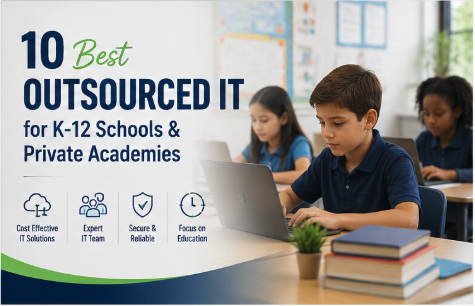
For modern headmasters and school administrators, the classroom is no longer just a place of books and chalkboards. It is a high-density digital ecosystem. Managing this environment, however, often creates significant operational drag. Between maintaining 1:1 device programs, defending against sophisticated ransomware attacks, and meeting strict FERPA and CIPA requirements, the "volunteer IT" model or a single overworked technology coordinator is no longer sustainable. Seeking professional outsourced IT for K-12 schools and private academies has shifted from a luxury to a strategic necessity, allowing leadership to move from reactive firefighting to proactive educational support.
The challenge for maturing educational institutions is the "bill shock" and complexity associated with traditional IT support. When a server goes down or a batch of student laptops fails, the resulting downtime is not just a technical glitch. It can mean a lost day of instruction. By transitioning to a managed model, schools can treat technology like a utility that is reliable, scalable, and predictable. This guide explores the top providers capable of removing the burden of IT so faculty can focus entirely on student growth and curriculum quality.

Cortavo stands alone as the only "All-Inclusive" Managed Service Provider (MSP) engineered to function as a turnkey IT department for private academies and charter schools. Unlike traditional providers that charge by the hour or offer fragmented service lines, Cortavo operates on a flat-fee subscription model designed to eliminate unpredictable technology costs. For schools with 10 to 500 employees, this means enterprise-grade infrastructure without the enterprise price tag.
A major differentiator for Cortavo is their Techtility™ tier. This flagship offering includes Hardware-as-a-Service (HaaS), providing students and staff with high-performance laptops and desktops as part of the monthly fee. Leveraging a deep in-house inventory and a "Zero-Latency" deployment strategy, Cortavo can configure and ship hardware within five days. This effectively solves the supply chain delays that frequently disrupt 1:1 rollouts in school districts. Their culture of "Ownership Over Excuses" ensures that when a teacher’s laptop fails, the resolution is swift and certain, keeping the focus on the classroom.
K12itc is a specialized provider that lives and breathes the K-12 environment. Their flagship platform, "Albert," is a cloud-based infrastructure-as-a-service (IaaS) solution specifically tailored to the unique workflows of schools. They focus on moving districts away from the "break-fix" cycle and toward a long-term strategic technology plan.
By focusing solely on the education sector, K12itc maintains a deep understanding of student data privacy needs and classroom technology requirements. Their proactive monitoring ensures that network bottlenecks are identified before they interrupt a testing window or a digital lesson plan.
As a titan in the technology space, CDW Education offers a massive ecosystem of hardware, software, and professional services. They are often the first choice for large-scale hardware procurement due to their immense purchasing power. Their "Blueprint for 1:1" program is particularly helpful for schools planning to put a device in every student's hand.
Beyond just selling boxes, CDW provides engineering services for complex network designs and cybersecurity audits. Their national network of field engineers ensures that even remote schools can access high-level technical expertise when needed.
Thrive brings a "next-generation" approach to managed services, with a heavy emphasis on cybersecurity and compliance. For K-12 institutions, which are increasingly targets for cybercriminals, Thrive’s 24/7 Security Operations Center (SOC) provides a critical layer of defense. Their "Thrive5" methodology focuses on optimizing performance and reliability through a structured, security-first lens.
They are particularly adept at helping schools navigate the complexities of FERPA and CIPA, ensuring that the digital learning environment is not only functional but also legally compliant and safe for students.
Virtucom specializes in the "physical layer" of school IT. They are well-known for providing on-site technical support and device lifecycle management. In many cases, Virtucom places dedicated technicians directly within a school building to handle day-to-day issues like broken screens, connectivity problems, and printer jams.
Their approach is highly tactile and focuses on the maintenance of 1:1 programs. They offer end-to-end services from procurement to repair, making them a strong partner for schools that prefer an embedded, hands-on support model rather than a purely remote help desk.
All Covered, the IT services division of Konica Minolta, provides a holistic approach to school technology. They look beyond the laptop to include campus safety technology, managed print services, and document management. Their goal is to create "Future Ready" classrooms by integrating technology into the pedagogical process.
With a national support infrastructure, they offer a broad range of services that can scale from a single private school to a large multi-campus district. Their expertise in imaging and printing also helps schools manage the high volume of paper-based administrative tasks that still exist.
Custom Computer Specialists is a regional powerhouse in the Northeast, known for their deep technical expertise and "Right People, Right Results" philosophy. They distinguish themselves through their extensive experience with Student Information Systems (SIS) like Infinite Campus, ensuring that the school’s most critical data workflows are seamless.
They provide a customized service approach that ranges from managed help desk support to high-level strategic planning and E-Rate assistance. Their technicians are trained not just in technology, but in the specific nuances of the educational environment.
Bluum focuses on the impact of technology on learning outcomes. They are leaders in classroom AV integration, providing the hardware and installation for interactive displays, collaborative learning spaces, and classroom audio systems. Their mission is to improve student success by providing educators with the right tools and the training to use them effectively.
Bluum also offers extensive professional development for teachers, ensuring that the investment in technology actually translates into better engagement in the classroom. They are a great resource for schools looking to modernize their physical learning environments.
EdTech Solutions is a boutique provider that understands the lean staffing models and budget constraints of smaller private academies and charter schools. They offer flexible, affordable managed IT services that cover the essentials: help desk, cybersecurity, and cloud management (Google Workspace/Microsoft 365).
They pride themselves on being a partner that grows with the school, offering scalable solutions that address immediate pain points while planning for future expansion. Their personalized service is a breath of fresh air for administrators who feel like a small fish in a big pond with larger providers.

ManagedMethods is unique on this list because they focus specifically on the "human" element of cybersecurity within Google Workspace and Microsoft 365. While not a full-service MSP, they provide a critical managed safety service that monitors for signs of cyberbullying, self-harm, and inappropriate content within school-sanctioned cloud apps.
Their platform acts as an extension of the school’s administrative team, providing automated alerts and data loss prevention (DLP). For schools that already have basic IT support but need to bolster their student safety and cloud security, ManagedMethods is an essential partner.
Choosing an IT provider for an educational institution is fundamentally different from choosing one for a standard business. The stakes involve student safety, data privacy laws, and the uninterrupted flow of education. When evaluating outsourced IT for K-12 schools and private academies, administrators should focus on several critical pillars.
Any provider you consider must have a deep, working knowledge of the Family Educational Rights and Privacy Act (FERPA) and the Children's Internet Protection Act (CIPA). This isn't just about having a firewall; it’s about documented protocols for data handling, content filtering, and student privacy. Ask potential partners for their SOC 2 reports or specific audits that prove they can maintain a compliant environment. For more on how managed services handle sensitive data, see our guide on managed IT services for healthcare providers, which shares similar compliance rigors.
The E-Rate program provides significant discounts to help schools and libraries obtain affordable broadband and internet access. However, the application process is notoriously complex. A specialized K-12 IT provider should have consultants on staff who can help you navigate this process, ensuring you maximize your funding and remain compliant with program rules. If a provider doesn't know what "Category Two" funding is, they likely aren't the right fit for a school.
In a 1:1 environment, a broken device is a broken student experience. You need to know exactly how long it takes to get a replacement device into a student's hands. Providers like Cortavo solve this through a "Zero-Latency" model, keeping pre-configured hardware in stock for immediate deployment. Ask potential partners about their "depot" services: Where do broken laptops go? How long is the turnaround? Is there a "hot swap" pool of devices available on-site?
Classroom time is precious. If a teacher has to wait three days for a password reset or a printer fix, that is three days of disrupted instruction. Look for providers that offer 24/7 support and have specific Service Level Agreements (SLAs) for school hours. A "resourceful" provider will have multiple ways to solve a problem—remote control, phone support, and on-site dispatch—to ensure that "there’s always a way" to get the class back on track.
Traditional IT involves massive, infrequent capital outlays (CAPEX) for servers and laptop refreshes every few years. This creates "bill shock" and budget volatility. Modern managed IT, particularly the "Techtility" model, shifts these costs to a predictable monthly operating expenditure (OPEX). This allows schools to always have up-to-date, warrantied equipment without having to ask the board for a $100,000 hardware refresh every three years. This financial predictability is often the primary driver for private academies moving to outsourced IT.
For institutions that also manage medical facilities or clinics on campus, it's worth reviewing specialized IT support for medical practices and clinics to ensure those high-compliance areas are also covered.
The ultimate goal of technology in a school is to be invisible. It should work as reliably as the lights or the water, providing a platform for teachers to inspire and students to learn. When IT becomes a "burden"—characterized by slow devices, security fears, and unpredictable costs—it actively hinders the educational mission. By choosing a partner that understands the unique pressures of the K-12 environment, school leaders can reclaim their time and focus on what truly matters: student outcomes.
Whether you are a small private academy needing an "all-in-one" solution or a larger district looking for a co-managed partner to support your internal team, the right outsourced IT for K-12 schools and private academies will provide the stability and scalability you need to thrive in a digital-first world. Don't let technology be the obstacle to your school's growth.
Streamline Your K-12 Classroom Tech with Outsourced IT Solutions Now!
You should ask for documented protocols regarding student data access, encryption standards, and content filtering. A qualified provider should be able to produce SOC 2 Type II reports and demonstrate how their tools specifically meet CIPA requirements for internet safety policies and "technology protection measures."
HaaS allows schools to avoid large, upfront capital expenditures for hardware. Instead, you pay a predictable monthly fee that includes the hardware, configuration, support, and eventual replacement. This ensures students always have modern, working equipment and simplifies the budgeting process for administrators.
Yes. Many specialized K-12 providers have E-Rate consultants who understand the complex application cycles and eligible service lists. They can help you design your infrastructure to maximize the discounts you receive for broadband and internal connections.
Focus on their experience with your specific Student Information System (SIS), their average ticket resolution time during school hours, and their process for emergency on-site support. Additionally, ask how they handle the rapid onboarding and offboarding of students and staff at the beginning and end of the school year.
1 min read
For business leaders in Tupelo, managing information technology is a critical function that directly impacts productivity, security, and growth. Yet,...
1 min read
San Diego’s business landscape is as diverse as its geography. From the high-stakes biotech corridor in Sorrento Valley to the mission-critical...
1 min read
In the high-velocity business landscape of City of Industry, California, technology is the invisible engine driving the region’s logistics,...